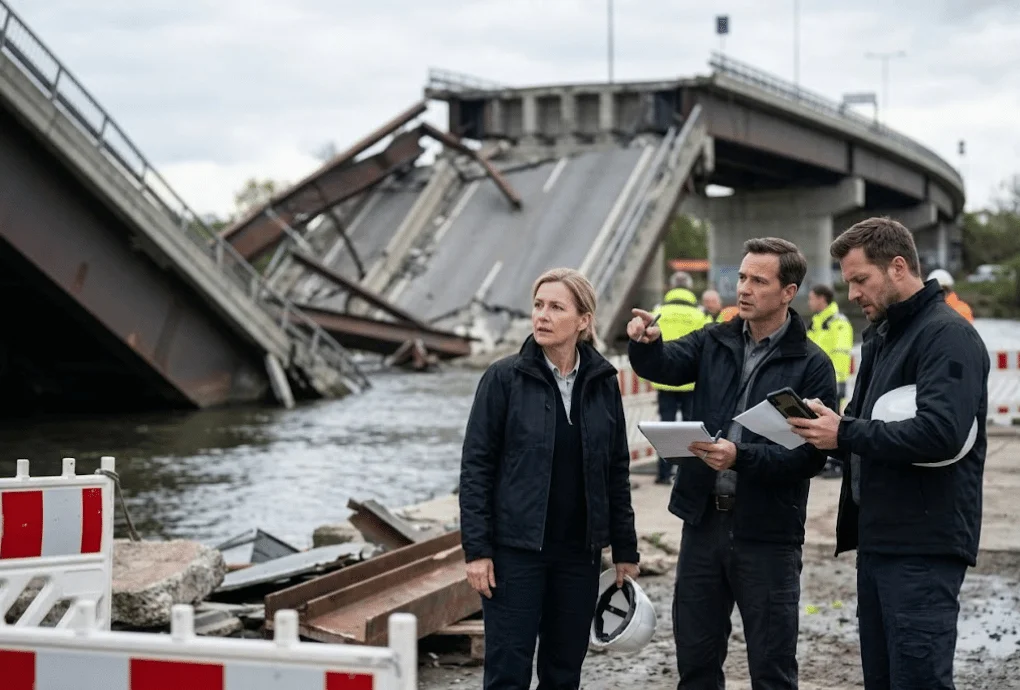
A bridge collapse lawyer investigates why a structure failed and identifies every party that may share legal responsibility. These cases can involve engineers, contractors, public agencies, vessel owners, manufacturers, insurers, and employers. Early legal review matters because evidence can disappear and some filing rules can arrive quickly.
Direct answer: A lawyer can help after a bridge failure involving serious injury, death, disputed fault, or major financial loss. Counsel can preserve evidence, identify defendants, calculate damages, and track state, federal, or maritime deadlines. The correct legal route depends on how the structure failed and who owned or operated it.
| Key question | U.S. overview |
|---|---|
| Who may be liable? | Designers, contractors, maintenance companies, public agencies, vessel interests, manufacturers, or other negligent parties |
| What claims may apply? | Negligence, wrongful death, product liability, maritime claims, workers’ compensation, or public-entity claims |
| What damages may be available? | Medical costs, lost income, future care, pain and suffering, property losses, and qualifying death-related damages |
| How are lawyers usually paid? | Many injury firms use contingency agreements, while case costs may be handled separately |
| Why act quickly? | Evidence may change, and government or maritime procedures can create unusual deadlines |
| What should you bring? | Medical records, photographs, videos, witness details, employment records, and insurer communications |
Key Takeaways
- Serious structural failures often involve several defendants and several legal systems.
- A ship strike can bring federal maritime law into a claim that otherwise looks like ordinary negligence.
- Claims involving public agencies may require special notice before a lawsuit begins.
- Engineering records, inspection files, electronic data, and physical components can become crucial evidence.
- Explain attorney fees and litigation expenses in writing before representation begins.
When a Bridge Collapse Lawyer Can Help
Consider legal advice after a serious injury, fatality, disputed cause, or significant property loss. Complex cases often need engineers, reconstruction specialists, medical experts, and insurance analysis. Lawflowa’s good injury lawyers guide explains useful screening questions for comparing counsel.
A smaller property-only claim may not require full litigation. Serious injuries change the risk because future medical needs may remain unknown for months. A signed release can end further recovery even if complications appear later.
Who May Be Liable After a Structural Failure
Responsibility depends on the failure mechanism, ownership, maintenance history, and events immediately before the incident. Designers may face claims involving defective calculations or specifications. Contractors may face claims involving construction mistakes, while manufacturers may face defect allegations.
| Failure issue | Evidence lawyers may examine | Possible responsible parties |
|---|---|---|
| Design error | Plans, calculations, peer reviews, change orders | Engineering firms, design consultants |
| Construction defect | Daily reports, photographs, testing, material records | General contractors, subcontractors |
| Poor maintenance | Inspection files, repair orders, budgets, warnings | Owners, operators, maintenance contractors |
| Failed component | Physical parts, testing data, recalls, specifications | Manufacturers, distributors, installers |
| Vehicle or vessel impact | Event data, navigation records, video, communications | Drivers, carriers, vessel owners, operators |
| Unsafe work activity | Site plans, load records, safety logs | Contractors, employers, project managers |
Public ownership adds another layer. Government defendants may have immunities, damages rules, and pre-suit notice requirements that private companies do not. A local attorney must check the controlling state and agency rules.
A failed manufactured component can also create a product claim alongside negligence claims. Lawflowa’s product liability attorneys guide explains how defect and causation issues differ from ordinary fault. Multiple theories may proceed together when different failures contributed to the same event.
What Compensation May Be Available
Compensation depends on the jurisdiction, injuries, liability findings, and available insurance or assets. Economic damages usually focus on measurable losses tied to the event. Non-economic damages address human losses that do not come with standard invoices.
Common claimed losses can include the following.
- Emergency treatment and hospital bills.
- Rehabilitation and future medical care.
- Lost wages and reduced earning capacity.
- Property damage and replacement costs.
- Pain, disability, disfigurement, and lost enjoyment.
- Funeral expenses and qualifying wrongful-death losses.
Workers injured while performing bridge work may also have workers’ compensation rights. A third-party claim may exist against someone other than the employer. Families may have wrongful-death or survival claims, depending on state law.
Insurance disputes can become a separate problem after liability is identified. Lawflowa’s insurance claim attorneys guide covers documentation, denials, and settlement negotiations. Policy language and coverage limits can materially affect recovery.
Filing Deadlines Can Change the Case
No single nationwide deadline applies to every structural failure claim. State personal-injury and wrongful-death statutes vary, and public-entity notice rules can be shorter. The safest approach is to identify every possible defendant before calculating the deadline.
Maritime cases add federal rules. Under 46 U.S.C. § 30106, a civil action for personal injury or death from a maritime tort generally must begin within three years. Other statutes, court orders, contracts, or state rules may create different deadlines.
Vessel owners can also seek limitation of liability under federal maritime law. Under 46 U.S.C. § 30529, the owner’s limitation action must generally start within six months after written notice of a claim. Once filed, the federal court can set a separate deadline for claimants to appear.
Lawflowa’s boat accident lawyer guide explains why water-related injury claims can follow different procedures. It also shows why ordinary road-accident assumptions can be dangerous near navigable waters. A ship-related structural failure can require both injury and maritime experience.
Evidence That Should Be Preserved Early
The strongest cases often start with preservation, not a demand letter. Emergency work may repair, remove, test, or discard physical components. Digital systems can also overwrite useful data unless someone acts quickly.
Important evidence may include the following.
- Inspection reports and maintenance histories.
- Original plans, calculations, and later modifications.
- Construction logs, testing reports, and change orders.
- Photographs, videos, drone footage, and traffic cameras.
- Vehicle event data or vessel navigation records.
- Radio traffic, dispatch records, and emergency communications.
- Witness names, statements, and contact information.
- Medical records, wage records, and disability documentation.
Lawyers may send preservation notices and seek court orders when evidence is at risk of immediate loss. Experts can then examine the same materials before repairs change their condition. That process helps connect technical failure evidence with legal causation.
How Lawyers Build a Complex Structural Claim
These cases usually begin by separating cause from legal responsibility. A technical failure does not automatically prove negligence by every involved party. The legal team must connect conduct, causation, and damages to each defendant.
A typical investigation may follow these steps:
- Secure medical, scene, and incident records.
- Identify owners, contractors, designers, insurers, and public entities.
- Preserve physical and electronic evidence.
- Retain appropriate engineering or maritime experts.
- Analyze duty, breach, causation, and damages.
- Present claims to insurers or responsible parties.
- File suit when negotiations fail, or deadlines require action.
Most civil claims use a lower burden than criminal cases. Lawflowa’s preponderance of evidence guide explains the common civil standard in plain language. The precise burden and available claims still depend on governing law.
Legal Fees and Case Costs
Many personal-injury firms use contingency agreements for serious accident claims. Under that model, attorneys take fees from a recovery rather than billing hourly. The percentage, timing, and treatment of expenses vary by contract and jurisdiction.
| Cost issue | What to ask before signing |
|---|---|
| Attorney fee | What percentage applies before filing, after filing, and at trial? |
| Case expenses | Who advances expert, filing, deposition, and records costs? |
| No recovery | Do you owe case expenses if the claim loses? |
| Multiple claims | Does one agreement cover maritime, public-entity, and product claims? |
| Appeal | Does the percentage change if the case is appealed? |
Complex engineering cases can create substantial expert costs. Ask whether those expenses are deducted before or after the attorney percentage is calculated. Get every answer in the written fee agreement.
How to Choose the Right Attorney
General injury experience is useful, but structural cases can require narrower skills. Ask about prior catastrophic-loss work, engineering evidence, government defendants, and complex insurance coverage. Vessel-impact cases may also require maritime litigation experience.
Useful questions include:
- Who will manage the file day to day?
- Which engineering experts does the firm expect to use?
- Has the firm handled claims against public agencies?
- Has the firm handled maritime limitation proceedings?
- Who advances expert and litigation costs?
- What happens if several defendants blame each other?
- How will the firm calculate future medical and income losses?
Don’t choose counsel based on a settlement promise alone. Early case values are often uncertain because medical recovery and liability evidence develop over time. A careful attorney should explain risks as clearly as possible.
What Recent U.S. Investigations Teach
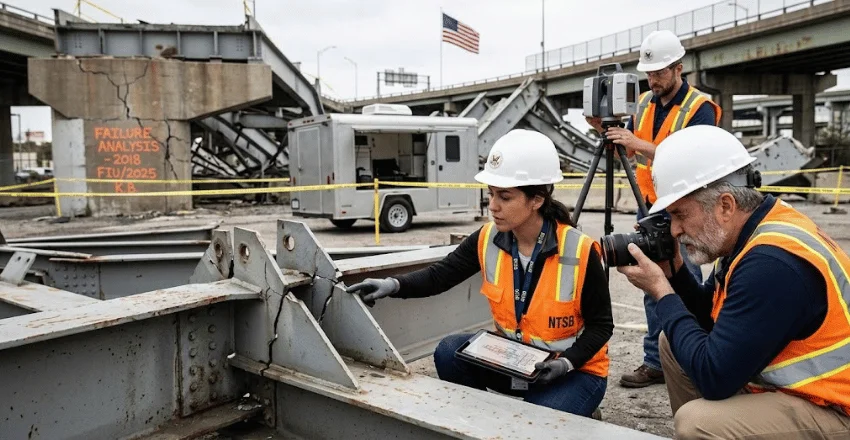
Different disasters show why no single legal theory fits every structural failure. The NTSB tied the 2007 I-35W collapse to inadequate gusset-plate capacity and added loading. It tied the 2018 FIU pedestrian bridge failure to design calculation errors.
The NTSB completed its Key Bridge investigation in November 2025. It found a loose signal wire caused the Dali blackout and loss of propulsion. The agency also identified bridge vulnerability and worker-notification issues as contributing factors.
Those examples point toward different evidence, defendants, and legal rules. Engineering design may dominate one case, while maintenance or vessel operations dominate another. A sound claim follows the evidence instead of assuming one cause.
What to Do After a Serious Structural Failure
Get emergency treatment first and follow medical instructions. Save photographs, videos, damaged property, witness information, and every insurance communication. Avoid signing broad releases before you understand future medical and financial losses.
Next, speak with a licensed attorney in the state where the incident occurred. Ask for an immediate deadline review and an evidence-preservation plan. Bring records of medical treatment, lost wages, property damage, and communications with insurers or agencies.
Lawflowa provides general legal information and does not replace advice from your lawyer. Laws, deadlines, immunities, and recoverable damages vary across jurisdictions. A qualified attorney can apply those rules to your specific facts.
Frequently Asked Questions
How much does a bridge collapse lawyer cost?
Many injury attorneys use contingency fees, so attorney payment depends on a successful recovery. Percentages and case-cost rules vary by firm and jurisdiction. Review the written agreement before authorizing experts or litigation expenses.
Who can be sued after a bridge failure?
Potential defendants can include designers, contractors, owners, maintenance companies, public agencies, manufacturers, drivers, or vessel interests. The correct defendants depend on the cause and governing law. An investigation may support claims against several parties.
How long do I have to file a claim?
The deadline depends on the jurisdiction and type of defendant. Government notice rules may arrive before the normal lawsuit deadline. Maritime injury claims generally have a three-year federal limit, subject to important exceptions.
What if a ship caused the structure to fail?
Federal maritime law may apply when a vessel collision causes injury on navigable waters. Vessel owners may seek limitation of liability under federal law. Claimants can also face court-set deadlines within that proceeding.
Can a family bring a wrongful-death claim?
Qualifying relatives or an estate may have claims after a fatal incident. Eligibility and recoverable damages depend on state law and other governing rules. Maritime deaths can add separate federal issues in some cases.
Final Takeaway
Structural disaster claims combine injury law with technical evidence and strict procedural rules. The first priorities are medical care, preserving evidence, identifying the defendant, and reviewing deadlines. Early advice can prevent a procedural mistake from weakening an otherwise valid claim.