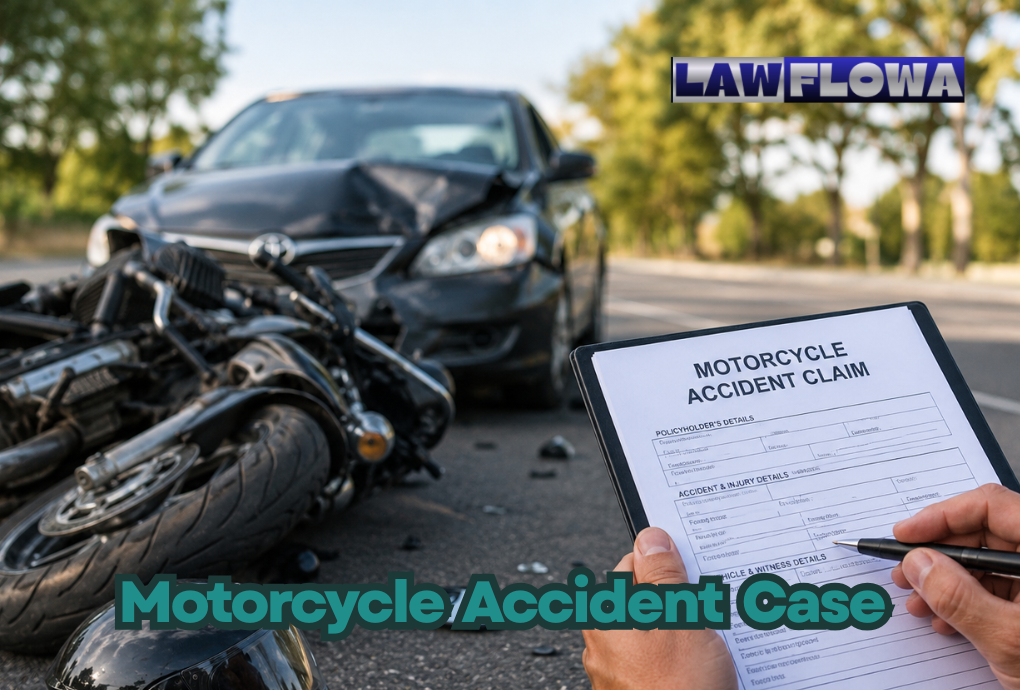
A motorcycle accident case is a personal injury claim in which an injured rider or passenger seeks compensation from the person or company whose negligence caused the crash, usually through that party’s insurer. To win, you generally need to show the other party was careless, that the carelessness caused the collision, and that you suffered real losses such as medical bills, lost income and pain and suffering. Most cases settle with the insurer; a lawsuit is filed only if negotiation fails or a filing deadline is close.
Motorcycle claims are harder than typical car claims for three reasons: injuries tend to be more severe, insurers often argue the rider was partly to blame, and riders can face bias from adjusters and jurors who assume motorcyclists ride recklessly. This guide explains your rights, the insurance process, how compensation is calculated and each stage of a lawsuit under US law.
Key terms at a glance
| Term | What it means in a motorcycle case |
|---|---|
| Negligence | Failing to use reasonable care on the road, such as turning left across a rider’s path |
| Liability | Legal responsibility for the crash and the resulting losses |
| Comparative negligence | A rule that reduces your recovery by your own share of fault |
| Statute of limitations | The state deadline for filing a lawsuit |
| Policy limits | The maximum an insurance policy will pay |
| UM/UIM coverage | Your own coverage for uninsured or underinsured at-fault drivers |
| Demand letter | A written request to the insurer setting out your injuries, losses and settlement figure |
| Discovery | The lawsuit stage where both sides exchange evidence and take depositions |
What counts as a motorcycle accident case?

You may have a case when a rider or passenger is hurt because someone else failed to act reasonably. The at-fault party is usually another driver, but it can also be:
- an employer whose delivery or commercial driver caused the crash
- a government agency responsible for a dangerous pothole or missing signage (these claims often have very short notice deadlines)
- a manufacturer or repair shop, where a defective part such as brakes or tires failed
- a bar or host in states with dram shop laws, where an intoxicated driver was served alcohol unlawfully
Common causes of motorcycle crashes
Identifying the cause early shapes the whole claim, because it tells you who is liable and what evidence to preserve.
- Left-turning vehicles: a driver turning left at an intersection fails to see or misjudges the speed of an oncoming motorcycle. This is one of the most frequently cited crash patterns.
- Unsafe lane changes: a driver moves over without checking the blind spot.
- Distracted driving: phone use, navigation screens or eating behind the wheel.
- Speeding and tailgating: including rear-end impacts when a rider slows for traffic.
- Impaired driving: alcohol or drugs slow reaction time and are a common basis for punitive damages.
- Road hazards: potholes, gravel, uneven pavement and debris affect two-wheeled vehicles far more than cars.
Your legal rights after a crash

As an injured rider you have the right to seek compensation for all losses the crash caused, to decline recorded statements to the other driver’s insurer, to refuse early settlement offers, and to hire an attorney at any stage. You also have rights under your own policy, which may include medical payments (MedPay) coverage and uninsured or underinsured motorist coverage. Note that in many no-fault states, personal injury protection (PIP) rules for motorcycles differ from cars, so check your policy wording rather than assuming car rules apply.
How fault rules affect you
| Rule | Effect if you share some blame | Where it applies |
|---|---|---|
| Pure comparative negligence | Recovery reduced by your percentage of fault, even if you were mostly at fault | Several states, including California and New York |
| Modified comparative negligence (50% or 51% bar) | Reduced recovery, but barred if your fault reaches the state’s threshold | The majority of states |
| Contributory negligence | Any fault at all can bar recovery | A small minority, including Alabama, Maryland, North Carolina, Virginia and Washington, DC |
Insurers often raise helmet use, lane splitting or speed to push part of the blame onto the rider. Whether helmet non-use can reduce damages depends on state law and whether it actually made the injuries worse. California expressly permits lane splitting, and a few other states allow limited filtering, while it remains illegal in most of the country.
Types of compensation

- Economic damages: emergency care, surgery, hospital stays, rehabilitation, future medical care, lost wages, reduced earning capacity, and motorcycle repair or replacement, plus damaged gear such as helmets and jackets.
- Non-economic damages: pain and suffering, emotional distress, scarring and disfigurement, and loss of enjoyment of life. Some states cap these in certain cases.
- Punitive damages: awarded only in cases of reckless or malicious conduct, such as drunk driving, and subject to strict standards and caps in many states.
The claim and lawsuit process, step by step

- Medical treatment. Get checked immediately and follow every treatment plan. Gaps in care are used to argue injuries are minor.
- Notify insurers. Report the crash to your own insurer and open a claim with the at-fault driver’s insurer. Give facts, not opinions, and do not admit fault.
- Investigation. Gather the police report, photos, witness contacts, and any dashcam, helmet-cam or business CCTV footage before it is deleted.
- Maximum medical improvement. Most attorneys wait until your condition stabilizes so future costs can be estimated.
- Demand letter. Your attorney sends a package documenting liability, injuries, bills, lost income and a settlement figure.
- Negotiation. The adjuster responds with offers. Most motorcycle claims resolve here.
- Filing suit. If talks stall, or the statute of limitations is approaching, a complaint is filed in civil court. Deadlines vary by state, commonly two or three years for personal injury, with shorter notice periods for claims against government bodies.
- Discovery. Written questions, document exchange, depositions and expert reports, such as accident reconstruction and medical testimony.
- Mediation. Many courts require a mediation session before trial, and many cases settle there.
- Trial and judgment. A judge or jury decides liability and damages. Either side may appeal.
How insurance shapes the outcome

Your realistic recovery often depends on available coverage. If the at-fault driver carries only their state’s minimum liability limits, and your injuries are serious, the policy may pay out quickly but fall far short of your losses. Your own UM/UIM coverage can fill that gap, and other sources may include an employer’s commercial policy or a defendant’s personal assets. Adjusters commonly delay, dispute liability, request broad medical authorizations or question the severity of injuries. Our guide to insurance claim attorneys explains how lawyers respond to these tactics.
Evidence that wins motorcycle cases

- Police crash report and any citations issued
- Photos of vehicle positions, skid marks, road surface, sight lines and your injuries over time
- Helmet-cam, dashcam, traffic camera or nearby business footage
- Independent witness statements
- Your damaged helmet and gear, kept unrepaired as physical evidence
- Medical records, bills, pay stubs and a daily journal of pain and limitations
- Accident reconstruction analysis for disputed-fault crashes
How lawyers help, and what they cost
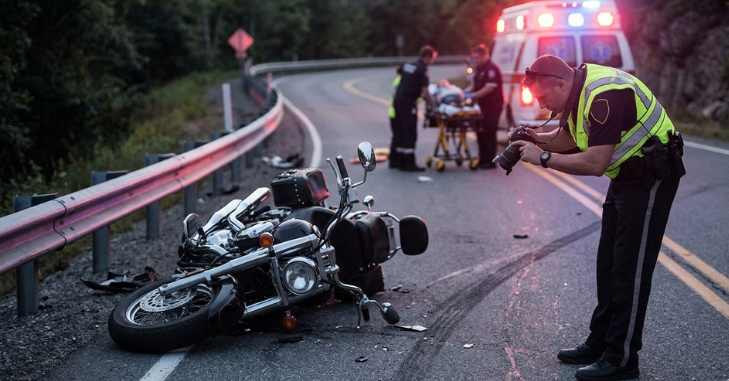
A personal injury attorney investigates liability, identifies every insurance source, values future losses with medical and economic experts, handles all communication with adjusters and files suit when needed. Most work on a contingency fee, taking a percentage of the recovery, often around a third, sometimes rising if the case goes to trial, plus case costs. Ask for the fee agreement in writing and how costs are deducted. For tips on vetting a firm, read our guide to choosing good injury lawyers.
Common motorcycle injuries

Typical injuries include traumatic brain injuries, spinal cord damage, fractures of the legs, pelvis and wrists, internal injuries, and road rash that may need skin grafts. Serious injuries can involve years of care, so future treatment costs frequently make up a large share of a case’s value.
What affects the settlement amount

There is no average figure that fits every case. Value depends on injury severity and permanence, total medical costs, lost and future income, your share of fault under state law, available insurance limits, the strength of the evidence and the venue where the case would be tried.
Why these cases are complex

Beyond severe injuries and limited policy limits, riders face a perception problem: adjusters and jurors may assume a motorcyclist was speeding or weaving. Countering that with objective evidence, like reconstruction data, witness accounts and video, is often the core of a successful case. Multiple defendants, such as a driver plus a road authority, add procedural complexity. The same principles apply on water, as our boat accident lawyer guide shows.
Tips to protect your case

- Call 911 and get medical care, even for injuries that seem minor.
- Do not apologize or discuss fault at the scene.
- Keep your helmet and gear, and do not repair the bike until it has been inspected.
- Avoid posting about the crash or your activities on social media.
- Do not sign releases or accept a quick offer before you know the full extent of your injuries.
- Check your state’s filing deadline early.
For more guides, browse our Accidents Law category.
Frequently asked questions
How long does a motorcycle accident case take?
Clear-liability claims with moderate injuries may settle within several months to a year. Cases with serious injuries or disputed fault that go to litigation often take one to three years.
Do I need a lawyer for a motorcycle accident case?
Not always for minor property-only claims, but for any significant injury or disputed fault an attorney usually helps, and most offer free consultations and contingency fees.
What if I was partly at fault?
In most states your compensation is reduced by your percentage of fault. In modified comparative negligence states you are barred at 50% or 51%, and in a few contributory negligence jurisdictions any fault can bar recovery.
Does not wearing a helmet hurt my claim?
It depends on your state. Some allow the defense to argue that a helmet would have reduced a head injury, which can lower damages for that injury, while others limit this argument.
How much is my motorcycle accident case worth?
It depends on injury severity, medical costs, lost income, your share of fault and available insurance. No reliable average applies to every case.
This article is general information, not legal advice. Laws vary by state, so consult a licensed attorney about your situation.