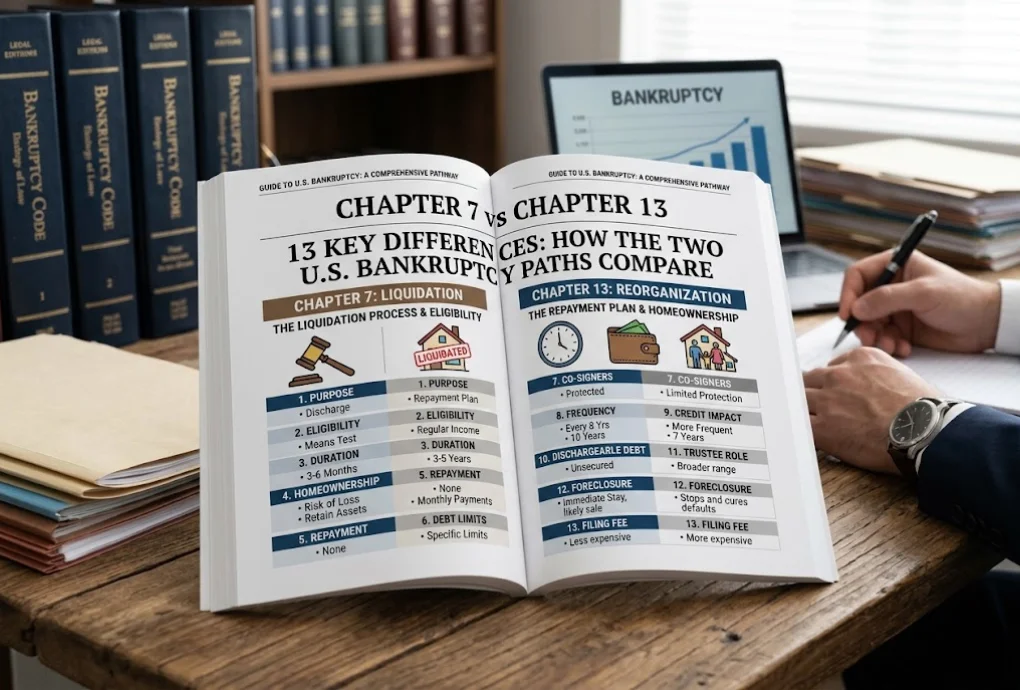
If you are comparing chapter 7 13, the biggest distinction is how each chapter handles debt and property. Chapter 7 usually focuses on liquidation and a faster discharge. Chapter 13 uses a court-approved repayment plan lasting several years.
Direct answer: Chapter 7 can discharge many qualifying debts without a repayment plan, but nonexempt property may be sold. Chapter 13 generally lets eligible individuals keep property while repaying creditors through a three-to-five-year plan. Income, assets, mortgage arrears, debt types, and financial goals can affect which chapter fits a filer.
Chapter 7 vs. Chapter 13 at a Glance
| Issue | Chapter 7 | Chapter 13 |
|---|---|---|
| Basic structure | Liquidation | Repayment plan |
| Typical timeline | Often several months | Usually three to five years |
| Property | Nonexempt property may be sold | Debtor generally keeps property while making plan payments |
| Income | Means testing may apply | Regular income is generally required |
| Repayment plan | No | Yes |
| Mortgage arrears | Limited ability to cure long-term arrears | Can allow arrears to be addressed through the plan |
| Court filing fee | $338 | $313 |
| Credit report | Generally up to 10 years | Generally up to 7 years |
| Discharge timing | Usually after case requirements are completed | Generally after completing required plan payments |
The U.S. Courts describe Chapter 7 as liquidation of nonexempt property for creditor payments. Chapter 13 instead adjusts debts for individuals with regular income. Its repayment plan normally lasts three to five years.
The Main Chapter 7 13 Differences Explained
Understanding the structure of each chapter makes the comparison easier. Neither option simply erases every financial obligation. Each follows different rules concerning eligibility, property, payments, and discharge.
1. Chapter 7 Uses Liquidation Instead of a Repayment Plan
Chapter 7 does not require the repayment plan used in Chapter 13. A trustee reviews the debtor’s assets and available exemptions. Nonexempt property can potentially be sold and distributed among creditors. Many people worry that liquidation means losing every possession. Bankruptcy exemptions can protect certain property from liquidation. Available exemptions and their values can depend on federal and state law.
LawFloa’s Chapter 7 lawyer guide discusses eligibility, exemptions, trustees, and the general filing process. It can provide useful background before comparing both chapters. Individual outcomes still depend heavily on the facts and applicable law.
2. Chapter 13 Requires a Repayment Plan
Chapter 13 is designed for individuals with regular income who can make scheduled payments. Debtors propose a plan for paying qualifying obligations through a trustee. The plan usually lasts three or five years. Income can affect how long the repayment period lasts. Below-median income can generally produce a three-year commitment period. Above-median income generally results in a five-year period.
Chapter 13 does not necessarily require full repayment of every unsecured claim. The Bankruptcy Code imposes specific confirmation and disposable-income requirements. Creditor treatment also depends on debt classifications and the confirmed plan.
Eligibility Can Point a Filer Toward One Chapter
Income is an important difference between the two options. Consumer debtors seeking Chapter 7 may need to complete the statutory means test. The calculation evaluates whether Chapter 7 relief would be presumed abusive. Failing the initial income comparison does not automatically explain the final result. The test also considers permitted expenses and other statutory calculations. A bankruptcy lawyer can review the required forms and relevant state figures.
Chapter 13 generally requires regular income to support ongoing plan payments. A filer must also satisfy other Bankruptcy Code requirements. Eligibility should therefore be reviewed before choosing a chapter based only on speed.
What Happens to Your Home and Other Property?

Property protection is often the most important practical issue for homeowners. Chapter 7 can expose nonexempt equity to trustee administration. Exemptions determine how much property value may receive protection. Chapter 13 usually lets a debtor retain property while performing the repayment plan. It can also provide a mechanism for addressing past-due mortgage payments. U.S. Courts specifically identifies saving a home from foreclosure as a potential Chapter 13 advantage.
That does not mean Chapter 13 automatically saves every home. Ongoing mortgage obligations and plan requirements still matter. Anyone facing foreclosure should obtain advice before relying on general bankruptcy information. Consumers dealing with vehicle debt may face similar property questions. Secured loans create different issues from credit cards or medical bills. LawFloa also explains legal ways borrowers can protect a vehicle from repossession, which is useful background for secured car loans.
How Fast Does Each Bankruptcy Chapter Work?
Chapter 7 is generally the faster route because no multi-year payment plan is required. The case still involves required filings, trustee review, creditor procedures, and debtor education. Complications can make some cases take longer. Chapter 13 requires substantially more time because the repayment plan lasts years. A discharge usually comes after the debtor completes required plan payments. Limited hardship-discharge rules can apply in exceptional circumstances.
Time alone should not determine the filing choice. A faster case can create property risks that another chapter might address differently. A slower plan may serve someone who needs time to cure arrears.
What Does Filing Cost?
The current federal court filing fee is $338 for Chapter 7. The filing fee for Chapter 13 is $313. Attorney fees and required counseling costs are separate expenses. Installment payments may be available for qualifying filers. Some eligible Chapter 7 debtors can request a filing-fee waiver. Chapter 13 filing fees generally cannot receive that same waiver.
Legal fees vary by location and case complexity. Ask an attorney what the quoted fee covers before signing an agreement. LawFloa’s civil lawyer fee guide explains several common attorney billing structures.
Which Debts Can Bankruptcy Discharge?
Neither chapter eliminates every type of debt. Common nondischargeable obligations can include certain taxes, domestic support debts, and many government-backed student loans. Other exceptions can also apply. Chapter 13 can provide a somewhat broader discharge in certain circumstances. The exact differences depend on the legal nature of each debt. A filer should classify debts before estimating how much relief bankruptcy may provide.
Tax debt is especially fact-specific because timing and tax type can matter. Bankruptcy should not be assumed to erase a tax balance. LawFloa’s tax attorney guide covers other legal options for dealing with significant IRS debt.
How Bankruptcy Affects Your Credit Report
Bankruptcy creates a serious negative entry on a consumer credit report. The reporting period differs between the two common consumer chapters. Chapter 7 can generally remain for ten years, while Chapter 13 generally remains for seven years. That difference does not predict a particular credit score. Scores depend on multiple factors before and after filing. Payment history and future credit behavior can continue affecting creditworthiness.
Consumers should also review their credit reports after completing a case. Incorrect information can be disputed with credit reporting companies. The Consumer Financial Protection Bureau recommends checking reports and correcting errors promptly.
A Practical Way to Compare the Two Chapters
The best starting point is not asking which chapter is universally better. Instead, compare what each structure does with your income, property, arrears, and debt. Those factors usually reveal the more relevant questions.
Consider these issues before discussing bankruptcy with a professional:
- Is your income sufficient for a multi-year repayment plan?
- Do you own nonexempt property that could be exposed in liquidation?
- Are you behind on mortgage payments you want to cure?
- Are most of your debts unsecured?
- Do you owe taxes, support obligations, or student loans?
- Have you filed another bankruptcy case before?
- Can you maintain future mortgage or vehicle payments?
- Is fast debt relief more important than retaining certain assets?
This checklist does not determine eligibility by itself. Bankruptcy law contains detailed exceptions and procedural requirements. State exemption rules can also change the property analysis.
When Chapter 7 May Fit Better
Chapter 7 can make sense for qualifying filers with limited disposable income and substantial unsecured debt. It may also appeal to people seeking a shorter process. The tradeoff is possible exposure of nonexempt assets. A person with few valuable nonexempt assets may face different risks than a homeowner with significant equity. Income qualification also remains essential. The DOJ’s means-test rules should be reviewed using current figures.
When Chapter 13 May Fit Better
Chapter 13 may fit people who have regular income and need time to address arrears. It can be especially relevant when keeping property is a central concern. The debtor must still afford the required plan payments. The plan creates discipline and court supervision for several years. Missing required payments can jeopardize completion. A realistic household budget is therefore critical before filing.
Final Takeaway
The core choice involves speed, income, property, and repayment ability. Chapter 7 generally provides a shorter liquidation process. Chapter 13 generally offers a longer repayment structure that can protect important property.
Before filing, gather income records, debt statements, property values, and secured-loan information. Those documents help clarify the practical consequences of each chapter. They also make a legal consultation more productive.
Frequently Asked Questions
What are the most important chapter 7 13 differences?
Chapter 7 focuses on liquidation and does not use a multi-year repayment plan. Chapter 13 generally lets eligible debtors keep property while paying creditors over time. Income, assets, arrears, and debt types can affect which structure is available.
Is Chapter 7 better than Chapter 13?
Neither chapter is better for every filer. Chapter 7 may offer faster relief, while Chapter 13 can provide more time for certain secured debts. The better legal fit depends on the debtor’s financial facts and goals.
Can Chapter 13 help stop foreclosure?
Filing bankruptcy generally triggers an automatic stay against many collection actions. Chapter 13 can also provide time to cure certain mortgage arrears through a repayment plan. The debtor usually must keep meeting applicable post-filing obligations.
Do both chapters eliminate credit-card debt?
Qualifying unsecured credit-card balances can often be discharged in either chapter. Exceptions may apply based on fraud, recent borrowing, or other circumstances. A discharge analysis should examine each debt individually.
Can you switch from Chapter 13 to Chapter 7?
Conversion can sometimes be possible when statutory requirements are satisfied. The legal and financial consequences should be reviewed before converting. Current federal fee schedules list a $25 conversion fee from Chapter 13 to Chapter 7.